Autumn On The EB

Autumn On The EB
Showing posts with label Ware and the branches of the Westfield. Show all posts

Monday, December 4, 2017

The Parachute Fly - A Brief History

"I hate to admit this, but fishermen (yes,even fly fishermen) are basically lazy. They want huge trout and lots of them, within sight of the car. The tougher the access to a stretch of stream, the less it's fished, and the less it's fished, the better the fishing will be, all things being equal." - John Gierach


One of the most popular styles of dry flies today is the parachute style. This fly, developed in the 1930's, has been in and out of favor for decades and right now is riding a crest of popularity. Let's look at it's beginnings and why it's such a good style of fly.

Credit a young tyer from Scotland named Helen Todd who had become employed as a tyer at a commercial tackle house. In 1932 she became interested in an American theory that if hackles could be tied "spent" one would have a more effective dry fly. She accomplished this by tying in a "mast" (what we call a post) of stiff pig bristles and the style was born. Her company began selling the flies in 1933.
                                                        Photo from Ernest Schwiebert's Trout

Wait, there's more!! Enter William Brush from Detroit Michigan with his patented parachute hook in 1934. This brainchild seems straightforward enough. When forming the hook just leave some extra wire and then bend it up at a 90 degree angle to the hook shank. Now you have a stiff wire post to wrap hackles on. You also have a much heavier hook which will take the DRY out of dry fly. I actually was given some of these back in the early 1970's. I still think that hook would work with todays genetic hackles and fine wire hooks, something that was in short supply years ago.

Why It Works

Parachutes work because they suspend the body of the fly in the surface film instead of on or above the surface like a traditional dry fly. That's where the insects are, in the film!  Follow me here: You're standing in a stream during a good hendrickson, sulphur or BWO hatch, you name it.  Insects are in the air and on the water and trout are breaking the surface. Now, look hard at the rise forms. One would think that you would constantly see the adult mayflies disappearing in those swirls but you see very few. That's because the most insects that are the easiest for the trout to grab are trying to break through the surface tension of the water. Some get through, many don't and it's easy pickings for the trout. This is  the emerger or subimago stage.


A Better Parachute

Conventional Wisdom dies hard. We have been tying dry flies for close to 150 years and most of our mayfly imitations are our attempts to copy the ADULT stage of the mayfly which is not the choice stage for the trout. (Yes, I know that your traditional Adams catches trout but I bet you've witnessed some nerve wracking refusals as your traditional dry drifted over a feeding fish time and time again). It's time to change things up! If the most prevalent stage of a mayfly is the subimago stage then your fly should imitate it. If the Parachute Dry does this find the style of Parachute that does it best. Enter the Best Parachute: The Klinkhammer Style!

Why is it the best? It's as close to imitating that Mayfly stage as we are going to get. The "head" of the fly is poking through the water surface while the body is suspended below, just like the natural. That's why it's silly to tie parachutes with TAILS. You don't need or want them. Get that rear end of the fly down below the surface.

When tying Klinkhammer Parachutes don't get too dainty. Besides a post and hackle I use some buggy thorax material to give the impression of life and movement. (remember, the mayfly is busting through its nymphal shell. There's a lot of action going on there!!)

For those who don't want to tie parachutes but want the same effect I would suggest Bob Wyatts' DHE Emerger. The same principle as the Klinkhammer but deer hair is the secret sauce with this pattern. All of this is found in the Wyatt book What Trout Want, The Educated Trout and Other Myths.. Good winter reading!

P.S. Give yourself a break when tying drys by using the genetic pre-sized saddle hackles. Until they breed a rooster to grow one size of feather these saddles are your best bet.

Ken


Tuesday, November 14, 2017

Big Brookies, A Change In Spawning Habitat, And Treble Hooks

"We do have to think seriously about conservation now, although it is chilling to realize there are catch-and-release fishermen alive today who don't know how to clean and cook a fish" - John Gierach


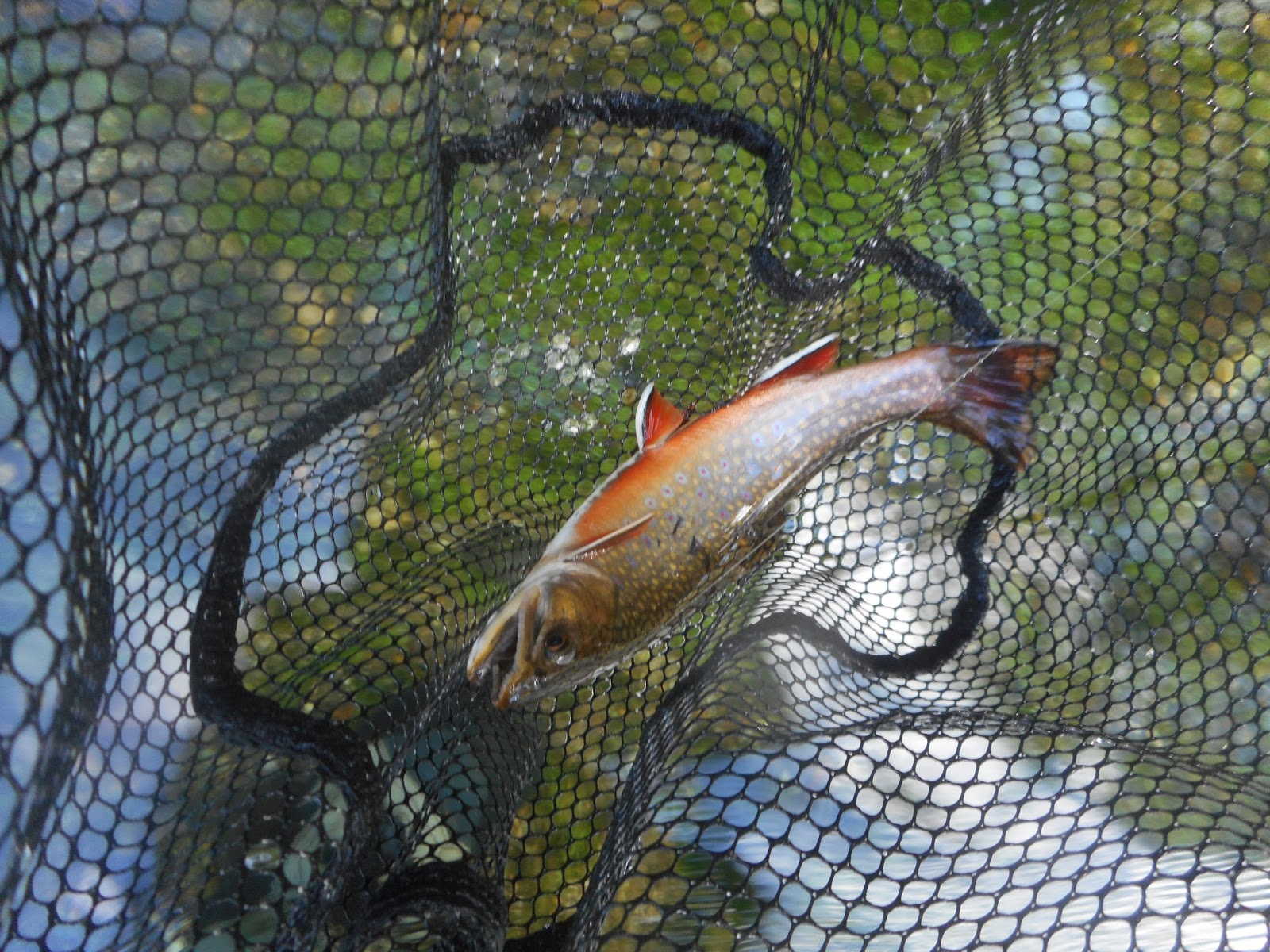
The brook trout are bigger this year on the Swift and there are more of them. Client Ray took two that were over a foot long yesterday on a size 16 partridge and orange swung along the bottom in six inches of water. The P&O did a great job and the bows and brookies accounting for all 18 fish (6 bows, 12 brookies). We covered water from the Tree Pool all the way up to the Bubbler Run and took fish everywhere. It was a good day.


Now for some disturbing observations. First, one of the PRIME spawning runs of the last few years seems to be out of commission and that is the riffle and gravel runs below the Duck Pond. Last year at this time it provided the best fishing, especially for bows who followed the brookies upstream to the vast gravel/spawning beds in the area. That has changed this year. I was there scouting in early October and noticed the gravel was mostly buried in weeds that were not there last year. There were no brookies either. Forward cast into mid November and the place is barren with nothing but weed growth over what was once clean gravel.

What causes this? Rapid weed growth is usually the result of an increased nutrient load in the river. Looks like a bit of study by the DFW and TU is in order. It is also a reality check for the hand wringers who don't like people fishing over brookies in the Fall. The LOSS OF HABITAT is ALWAYS the culprit!

NOTICE : I found an interesting rig at the Pipe lot Monday morning. It was a tiny treble hook embedded in a hunk of power bait!!!  The leader was still attached and it was light, maybe around 4x, and could of been used with a fly rod.

KEEP YOUR EYES OPEN!!! This is OUR river at least till January 1st when we are forced to share it. Until then, turn them in!!!!!!  800-632-8075 is the number!


Saturday, September 30, 2017

A Short Update - Brookies And Browns

" A friend told me there's life outside of the Internet and that I should check it out. I asked him to send me a link" - TheFunnyPlace.net


I hit the Swift Thursday morning around 11:00 am to toss some micro streamers (10 and 12), or some micro Bitch Creek streamers to be exact, to see if I could entice some bows to chase them. No bows but some good sized brookies came to play. They were all between 10-12 inches and there were 7 of them and they were found in or near the traditional spawning beds of the lower Swift. I think the run has started and my records state that by mid October we will be in full swing. They are already stacking up below the Rt 9 bridge.

Friday was a good day with my client Matt as we were the first (probably) to fish the Ware this Fall. The 38 degree air made the fleece necessary at 8:30 as we began to swing the reliable partridge and orange. We had four solid hits and landed two, a rainbow and a beautiful brown. The water level is low but cool enough to keep the trout active.  We were also greeted with a decent Trico hatch which the newly planted fish totally ignored.

Then we went to the Swift, walked right past the Pipe, and went down deep into Cady Lane to catch brookies on dries. It seemed that the brook trout population down there has thinned out(as one of our commentors pointed out) as the "herd" moves upstream to spawn. That has to mean that the monster browns will begin to move with them.

Back upstream for a few obligatory casts at the Tree Pool, then lunch, then a session at the crib dam before the day was over.


As I write it is raining. It will not be enough and we will need more!

Ken